
Halloween Decoration Safety: Candles, Cords, and Fire-Safe Displays
Decorations start more than 800 home fires a year, and a third of those start with candles. Here is how to light pumpkins, run cords, and set up a porch display that stays fun and fire safe.
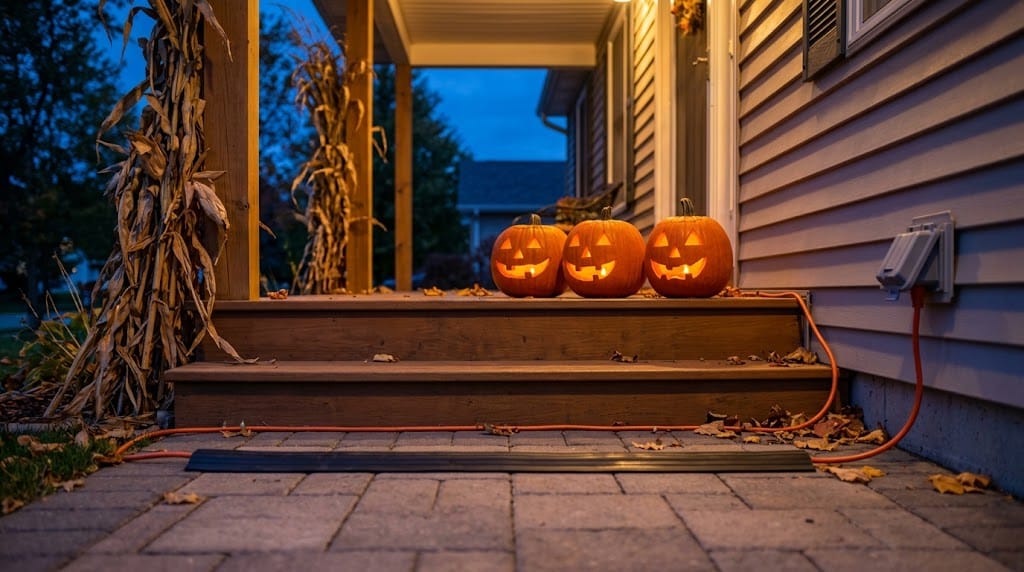
Halloween decorations are meant to look a little scary. The trouble starts when they actually are. A paper skeleton hung over a candle, an indoor extension cord snaking across a wet lawn, or a jack-o'-lantern flickering next to a hay bale can turn a fun, spooky display into a real fire or a trip to the emergency room.
This guide covers Halloween decoration safety in plain terms for anyone who likes to decorate for the holiday: what the fire and injury data say, how to light pumpkins and displays without open flames, how to handle cords and outdoor power, and how to set up a porch that trick-or-treaters can walk through safely.
Why Halloween Decorations Cause Home Fires
According to the National Fire Protection Association (NFPA), U.S. fire departments responded to an average of 835 home structure fires per year from 2020 to 2024 that began with decorations. Those fires caused an average of 3 civilian deaths, 29 injuries, and $18 million in direct property damage each year.
Two details in that data matter most for Halloween:
- Nearly half (47%) of decoration fires happened because the decorations were too close to a heat source, such as a candle or hot equipment.
- About one-third (33%) of decoration fires were started by candles.
Halloween decor is often built from the materials that burn fastest. NFPA points out that dried flowers, cornstalks, and crepe paper catch fire easily. Add costumes with loose fabric, fake cobwebs, thin plastic, craft paper, and paper props, and a single open flame becomes a serious hazard.
Injuries are a concern too. The U.S. Consumer Product Safety Commission (CPSC) reported in 2023 that an average of 3,200 Halloween-related injuries were treated in U.S. emergency departments each year over the previous three years. About 25% came from falls, including falls while putting up or taking down decorations, and 55% were linked to pumpkin carving.
Candles and Jack-o'-Lanterns: Choose Flameless
Carving and lighting pumpkins is a favorite tradition, and you can keep it without the flame. The simplest fix is also the most effective: take the open flame out of your display. NFPA and CPSC both recommend glow sticks or battery-operated candles for jack-o'-lanterns and other Halloween decorations.
Flameless options that work well
- Battery LED tea lights for carved pumpkins. Look for a warm white or amber flicker if you want a realistic glow.
- Glow sticks for small pumpkins, luminaries, and kids' costumes.
- Battery puck lights or colored string lights inside larger props, plastic skeletons, or lanterns.
- Timer-equipped LED candles for windows, so they shut off on their own at bedtime.
If you still use real candles
Some people prefer a real flame indoors on a dining table or mantel. If you do:
- Keep candles at least 12 inches from anything that can burn, the spacing NFPA recommends for all candles.
- Never leave a burning candle unattended, and blow candles out before you leave the room or go to bed.
- Keep candles off porches, steps, and walkways where costumes brush past.
- Teach children to stay away from open flames, including jack-o'-lanterns with candles inside.
NFPA's candle data shows why this matters: more than half of home candle fires start when something that can burn, such as curtains, bedding, decorations, or paper, is too close to the candle.
Indoor Halloween Decor: Keep Decorations Away From Heat
Since nearly half of decoration fires start because decor sits too close to heat, look at every display with that in mind. NFPA advises keeping Halloween decorations away from open flames and other heat sources, such as light bulbs and heaters.
A quick room-by-room check:
- Lamps and light fixtures: Do not drape fake cobwebs, fabric, or paper bats over lampshades or bulbs. Even LED bulbs run warm in enclosed fixtures.
- Space heaters and fireplaces: Keep cornstalks, hay bales, and fabric props well away from heaters, fireplace openings, and wood stoves.
- Kitchen: Keep paper decorations and centerpieces away from the stove and toaster.
- Exits: Do not block doors, hallways, or stairs with props. NFPA reminds homeowners to keep exits clear so nothing blocks an escape route.
Outdoor Halloween Decorations: Cords, Outlets, and Power
Modern Halloween displays often run on electricity: inflatables, animated props, projector lights, string lights, and fog machines. NFPA's electrical safety guidance for Halloween focuses on a few points every homeowner can check.
Use outdoor-rated cords outside
Extension cords come in indoor and outdoor ratings. Indoor cords are often cheaper, but only outdoor-rated cords are built for the weather they will face on a lawn or porch. Check the cord packaging or the tag on the cord itself before you use it outside.
Inspect before you plug in
- Look for frayed jackets, exposed wires, cracked plugs, and broken or missing grounding prongs.
- Take damaged cords out of service. Do not patch them with electrical tape.
- Check light sets and prop cords for broken or cracked sockets and loose connections, as CPSC recommends.
- Buy lights and electrical decorations listed by a recognized testing laboratory, such as UL or Intertek.
Plug outdoor displays into GFCI protection
A ground-fault circuit interrupter (GFCI) senses an imbalance in current and shuts off power before a shock can happen. Outdoor outlets should be GFCI protected, and NFPA notes that outlets in damp and wet locations should have a weatherproof "while in use" cover so the outlet stays protected with a cord plugged in. Press the test and reset buttons before decorating. If your outdoor outlets are not GFCI protected, have a qualified electrician add protection.
Do not overload circuits
Plug displays into separate outlets where you can rather than chaining power strips together. If a breaker trips, treat it as a warning that the circuit is overloaded, not as a nuisance. Our guide to home electrical safety covers warning signs such as warm outlets and flickering lights.
Route cords so no one trips
Trick-or-treaters and neighbors walk across your front yard in the dark, carrying candy bags, in long costumes and masks that limit their view. Run cords along edges rather than across paths, and secure them with outdoor cord covers or garden staples. Never run cords under rugs or doormats, where heat can build up and damage goes unseen.
Inflatables, Fog Machines, and Animated Halloween Props
- Inflatables: Confirm the product is rated for outdoor use, stake it down with every tether provided, and check the power cord through the season, since many inflatables sit outside for weeks.
- Fog machines: They use both electricity and liquid, so keep them on a GFCI-protected outlet, follow the manufacturer's fluid instructions, and keep them off walkways where fog can hide steps.
- Animated props: Read the instructions for indoor or outdoor use. Many animated figures, such as motion-activated witches and skeletons, are indoor-only.
- Bring it in: Unplug outdoor displays when you go to bed or leave home, or put them on an outdoor-rated timer.
Set Up a Safe Porch, Yard, and Walkway
On Halloween night, your porch is where decorations, costumes, and visitors all meet. A few steps lower the risk for everyone:
- Light the path to your door well. Motion lights or solar path lights help; see our ideas for solar outdoor lighting.
- Clear the steps and entry of pumpkins, hay bales, and props so people can see where to put their feet.
- Place lit pumpkins (flameless or not) well out of the way of doorsteps, walkways, and yards where costumes pass, as NFPA advises.
- Keep pets away from the door, cords, and glow sticks.
Hosting a Halloween Party Indoors
A themed Halloween party brings guests, costumes, and decorations into the same rooms. Before guests arrive:
- Use flameless candles on tables, mantels, and buffet displays, where sleeves and capes reach across.
- Keep fabric, fake cobwebs, and paper decor away from lamps, the stove, and any space heater.
- Tape down or reroute cords for lights and music so guests in costume do not trip.
- Leave hallways and doors clear so everyone can get out quickly.
Hang Decorations Without Falling
Use caution on ladders. Falls are a leading cause of Halloween injuries, and many happen while hanging or removing decorations. Use a ladder that is the right height for the job instead of standing on chairs or railings, set it on firm and level ground, and have someone hold it. Keep three points of contact while climbing, and do not lean out to reach one more hook. Move the ladder instead. Measure the roofline or railing before you buy lights so you are not stretching strings to fit.
Costumes and Kids Near Decorations
Costumes connect directly to decoration safety, because loose fabric is what brushes against a candle or catches on a cord.
- Avoid costumes with long, trailing fabric, as NFPA recommends.
- CPSC suggests costumes made of polyester or nylon rather than sheer cotton or rayon, and costumes that fit well so children do not trip.
- Give children flashlights or glow sticks as part of their costume so they can see and be seen.
- Make sure masks allow full visibility and easy breathing, and check that a kid's costume does not drag near candles or props.
After Halloween: Take Down and Store Decorations Safely
Once the holiday ends, use the same care taking things down. Use a ladder rather than pulling lights off the gutters from the ground, unplug displays before you disconnect anything, and let fog machines and lights cool first. Before storage, check every cord and light string again, throw out anything damaged, and coil cords loosely so the wires are not kinked. Pack plastic props and inflatables dry, so they do not mildew. Our garage organization ideas include storage tips for seasonal decor.
A Quick Pre-Halloween Safety Checklist
- Swap open-flame candles in pumpkins and luminaries for LED lights or glow sticks.
- Walk each room and move decorations away from bulbs, heaters, fireplaces, and stoves.
- Check every cord and light set for damage, and retire anything frayed or cracked.
- Use only outdoor-rated cords and decorations outside, plugged into GFCI-protected outlets.
- Route cords away from paths and secure them.
- Clear exits, steps, and walkways.
- Test your smoke alarms. Our home fire safety tips cover alarm placement and escape plans.
- Set displays on timers or unplug them before bed.
Frequently Asked Questions
Is it safe to put a real candle in a jack-o'-lantern?
It is safer not to. NFPA and CPSC both recommend battery-operated candles or glow sticks in jack-o'-lanterns. A carved pumpkin on a porch sits right where costumes, paper bags, and dry leaves pass by, which is the setup that leads to decoration fires.
Can I use an indoor extension cord outside for one night?
No. NFPA advises using only outdoor-rated extension cords outside, because they are built for moisture and temperature changes. An indoor cord on damp grass raises the risk of shock and cord damage, even for one evening.
What decorations catch fire most easily?
NFPA lists dried flowers, cornstalks, and crepe paper as decorations that catch fire easily. Paper props, fabric, and fake cobwebs also burn quickly, so keep all of them away from candles, bulbs, and heaters.
Do LED Halloween lights get hot?
LED lights run much cooler than older incandescent bulbs, but they still produce some heat and still carry electrical current. Use listed products, check for damage, and do not bury them under fabric or paper.
Should I leave my Halloween display on overnight?
Turn displays off when you go to bed or leave home. An outdoor-rated timer makes this automatic and also saves electricity.


