Kitchen Organization Ideas: How to Set Up Drawers and Cabinets That Stay Neat
Most kitchens do not need more storage. They need the right things in the right drawer. If you can grab a spatula without digging, put pots away without a crash, and find the can opener on the first try, your kitchen is organized, no matter what it looks like inside. Good kitchen organization is about how the room works, not how it photographs. These kitchen organization ideas follow a plan to organize your kitchen one drawer and one kitchen cabinet at a time. The plan works in a small kitchen or a large one, for owners and renters alike: sort by zone, clear out duplicates, set up drawers, then cabinets, then the pantry. You will not need to buy much. A few drawer dividers and some storage bins cover most of it, and many homes already have boxes and baskets that do the job.
Start with zones, not containers
Before you buy a single organizer, think about how you move around the room. Kitchen design pros talk about zones: places where one kind of work happens. Most kitchens have four or five.
- Prep zone: the stretch of kitchen counter where you chop and mix. Knives, cutting boards, mixing bowls, measuring cups.
- Cooking zone: next to the stove. Pots and pans, lids, spatulas, oven mitts, cooking oil, salt and the spices you use most.
- Cleanup zone: around the kitchen sink and dishwasher. Dish soap, towels, trash bags, food storage containers.
- Serving zone: near the dishwasher or the table. Plates, glasses, flatware.
- Pantry zone: dry food, snacks, canned goods, baking supplies.
The rule is simple: store each thing where you use it first. Plates go near the dishwasher so unloading is one step. The cutting board lives by the prep counter, not across the room. When an item has a clear home close to where it gets used, it tends to go back there on its own.
Clear out duplicates and things you never use
This is the step that frees up the most storage space, and it costs nothing. Empty one drawer or one cabinet at a time onto the counter. Sort into three piles: use weekly, use a few times a year, and do not use.
- Duplicates: most kitchens have three can openers, a dozen wooden spoons and five spatulas. Keep the one or two you reach for and donate the rest.
- Food storage containers: match every container to a lid. Recycle any piece without a partner. Keep a set that nests inside itself.
- One-job gadgets: if it has not left the drawer in a year, it can go, or at least move to a high shelf.
- Seasonal items: a roasting pan, a turkey baster or cookie cutters can live in a bin on a top shelf or in a closet and come down once a year.
Do one area per session. A full kitchen purge in one afternoon tends to stall halfway with everything piled on the counters.
How to organize kitchen drawers
Drawers are where clutter builds fastest, because things get tossed in and the drawer gets shut. A few organizing tips keep each kitchen drawer working.
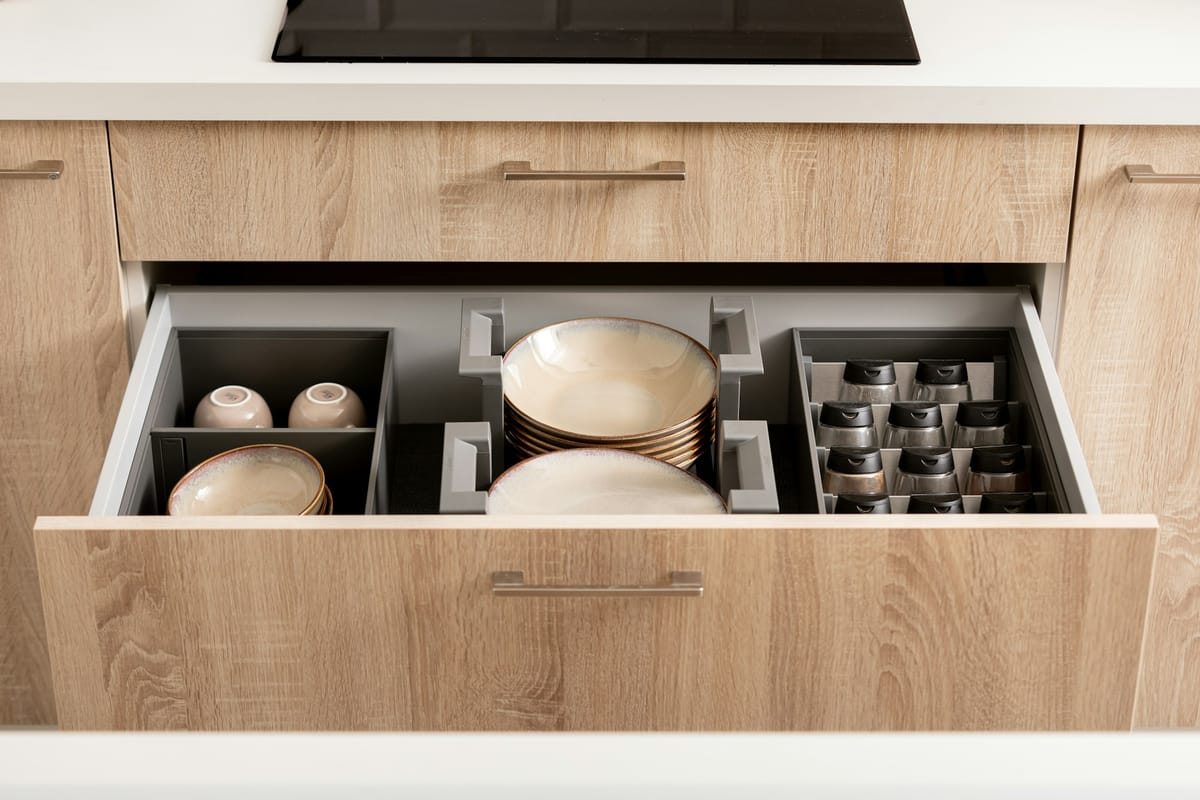
Use drawer dividers. Adjustable dividers or a set of small trays let you give every utensil type its own slot. You can also start with shallow boxes from around the house to test a layout before buying anything. Measure the inside of the drawer (width, depth and height) first so any organizer you buy actually fits.
Put the most frequently used items up front. Your everyday flatware and the kitchen utensils you use daily belong in the top drawer nearest the work zone. Backup items and rarely used tools go toward the back or in a lower drawer.
Stand things up when you can. In deeper drawers, files of baking sheets or lids standing on edge take less drawer space than flat stacks and are easier to pull out.
Give each drawer one job. A utensil drawer, a wrap and foil drawer, a towel drawer. The trouble starts when one drawer holds batteries, rubber bands, takeout menus and tape.
Keep a junk drawer, but put limits on it. One small drawer with a divided tray for pens, tape, scissors and twist ties is fine. When it stops closing, it is time to sort it.
Deep drawers for pots and pans
If your kitchen has deep lower drawers, they are often the best place for pots and pans, because you can see everything from above instead of crouching to dig in the back of a cabinet. Plates and bowls also work well in a deep drawer with a peg rack holding them in place, which keeps heavy dishes at a height where kids and shorter family members can reach them.
- Nest pots by size and keep lids separate, either standing on edge in a divider or in a shallow tray.
- Store the pan you use most on top so you never have to unstack.
- Line the drawer bottom with a non-slip liner so things do not slide when the drawer opens.
- Check the weight rating if you plan to load cast iron into an older drawer. If the drawer sags or the slides stick, move the heaviest pieces to a lower cabinet shelf.
Cabinets: use the height you already have
Most cabinet space is wasted above the stack. A shelf of mugs often has a foot of empty air above it. A few ways to use that vertical space:
- Add a shelf riser to make two levels inside one shelf, for example plates below and bowls above.
- Stand cutting boards and baking sheets on edge in a narrow cabinet or with a simple upright divider so you can pull one out without lifting the whole stack.
- Use the inside of the cabinet door for light things: a small rack for foil and wrap, or hooks for measuring spoons. Check that the cabinet door still closes and does not hit the shelf.
- Use baskets or bins on high shelves so you can pull down a whole group at once instead of reaching blind.
- Corner cabinets: a turntable or a pull-out basket brings the back of the cabinet forward. If you cannot install anything because you rent, a turntable that just sits on the shelf works too.
Upper cabinets suit light items and things you use daily at eye level. Heavy items belong low, where you are not lifting them overhead.
Under the kitchen sink and cleaning supplies
The cabinet under the kitchen sink is where many homes keep cleaning supplies, and it is also one of the easiest cabinets for a toddler to open. Poison Control (the National Capital Poison Center) gives clear rules for household cleaners: keep them in their original containers, never store food and cleaners together, and keep them locked up, out of reach and out of sight of children. The Utah Poison Control Center adds a simple step for kitchens: put safety latches on every drawer and cabinet where harmful products are kept.
- Move dishwasher pods, drain cleaner, oven cleaner and bleach to a high cabinet, or put a child safety latch on the under-sink door.
- Use a small caddy or bin so cleaners come out as one group and go back as one group.
- Never pour a cleaner into a cup, bottle or food container, even for a minute.
- Keep food, pet food and paper plates out of the same cabinet as cleaners.
- Save the Poison Help line, 1-800-222-1222, in your phone and post it inside a cabinet door.
The space under the sink also takes the brunt of any leak, so set things in a shallow tray you can lift out and check the pipes now and then. For more on keeping damp areas dry, see our guide on how to prevent mold in your bathroom and kitchen.
Store knives safely
Loose knives in a utensil drawer dull fast and cut hands that reach in blind. Give knives their own spot: a knife block on the counter, a wall-mounted magnetic strip above the prep area, or a drawer insert that holds each blade in its own slot. In homes with young children, keep sharp knives up high or in a drawer with a child latch, and put knives in the dishwasher point down.
Pantry organization that lasts
Whether your pantry is a walk-in closet or two cabinets, the same food storage habits help.
- Group by type: breakfast, baking, canned goods, pasta and grains, snacks. Clear bins or labeled baskets make each group easy to find.
- First in, first out: put new groceries behind older ones so the older food gets used first. If you are unsure how long something keeps, the USDA FoodKeeper app lists storage times for many foods.
- Decant only what makes sense: flour, sugar, rice and cereal stay fresher in airtight storage containers. You do not need to move every box into a jar.
- Keep a spice rack or tiered shelf near the stove for the dozen spices you use most, and store the rest in a drawer with labels on the lids so you can read them from above.
- Use the floor: heavy items like bags of potatoes, drinks and pet food sit best on the floor or the bottom shelf.
Small kitchen storage ideas
In a small kitchen, every inch of counter space counts. A few storage ideas that do not need a remodel:
- Keep only daily items on the countertops: the coffee maker, a utensil crock by the stove, maybe a fruit bowl. Everything else goes behind a door.
- Add a rail with hooks on an empty wall for mugs, towels or a few utensils. Renters can use removable hooks rated for the weight.
- Use the top of the refrigerator or the space above the cabinets for things you use a few times a year, in bins so they do not gather dust.
- A rolling cart can add extra storage and a little prep space, then tuck into a corner.
- If you have a kitchen island, use its open side for cookbooks or baskets of linens.
The same rules that work in a tight closet work here. Our guide to small closet organization ideas covers using vertical space and door storage in more detail.
Keep it organized after the first pass
A tidy kitchen stays that way with small habits, not a big weekend project every few months.
- Put things back in their home right after you use them, while the drawer is still open.
- Do a five-minute reset of the counter each night.
- When something new comes in, something old goes out, especially for mugs, water bottles and food storage containers.
- Every few months, empty one drawer and wipe it out. It takes a few minutes and catches crumbs and clutter early.
The best kitchen storage solution is the one that fits how your family cooks. Start with one drawer this week, see how it feels, and work out from there.
Sources: Poison Control, National Capital Poison Center (poisoncontrol.org, prevention tips); Utah Poison Control Center household safety checklist; USDA FoodKeeper app.