Bedroom Trends and Design Ideas You Can Actually Use at Home
Bedroom trends change every year, and most are about looks. This guide sticks to the ideas that also make a room easier to sleep and live in. The 2026 bedroom trend lists share a handful of them: warmer colors, layered textiles, upholstered beds, softer lighting, reading nooks and more built-in storage. For each one, you will find a version a homeowner or renter can do without a remodel. We begin with sleep, using guidance from the National Institutes of Health and the CDC, since a dark, cool, quiet room does more for rest than any new bedroom furniture.
Start with sleep: dark, cool and quiet
The NIH's National Heart, Lung, and Blood Institute advises keeping your bedroom quiet, cool and dark. A dim night light is fine if you need one. The CDC adds that adults 18 to 60 need 7 or more hours of sleep, and suggests turning off electronic devices at least 30 minutes before bed. Check these three things before buying decor:
- Dark. Light-blocking curtains or a liner behind your drapery help most if a streetlight shines in or you sleep during the day. Cover or turn away glowing chargers and clocks.
- Cool. Set the thermostat a little lower at night, use breathable bedding like linen or cotton, and keep a lighter blanket within reach.
- Quiet. A rug, heavy curtains and an upholstered headboard all soften sound in a room with hard floors and bare walls. A fan can cover street noise.
Keep the TV and the work laptop out of the bedroom if you can. The NHLBI suggests avoiding bright screens in the hour before bed.
Layout first, then decor
Most rooms feel calmer when the bed is the clear center and you can walk around it without turning sideways. A few practical rules:
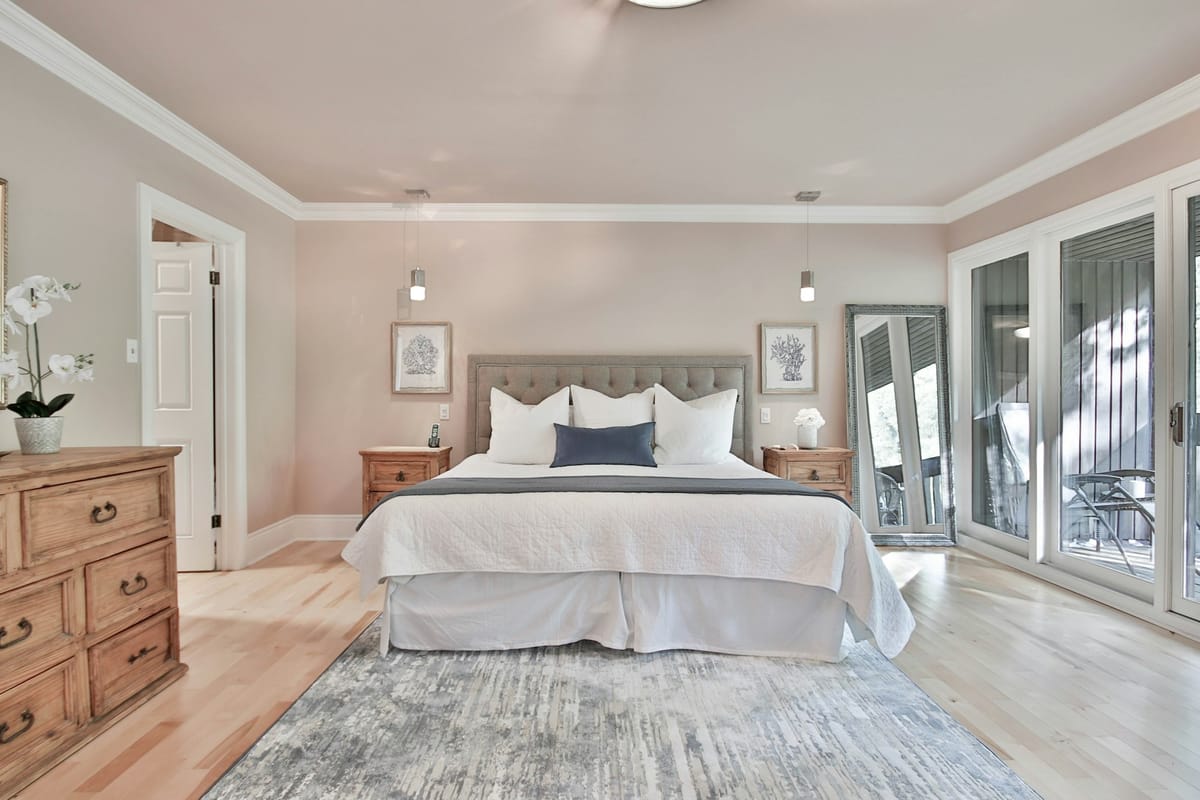
- Put the bed on the longest wall with no window behind it, if the room allows. Leave room to walk on both sides of a shared bed.
- Use matching or similar bedside tables at the same height as the top of the mattress. Each one should hold a lamp, a book and a glass of water, nothing more.
- Place the dresser where its drawers open fully. Anchor it to the wall. The CPSC says new dressers come with anti-tip devices and to install them right away, and older furniture can be anchored with inexpensive anti-tip brackets. A federal tip-over standard for dressers has applied since September 1, 2023, but anchoring still matters, especially with kids in the house.
- Mount or anchor the TV if one stays in the room, and only set it on furniture made to hold a TV.
In a small bedroom, choose a bed frame with legs so you can see floor underneath, and skip the extra chair if it blocks the path. Our small-space design tips cover more ways to make a tight room work.
Lighting in layers
One bright ceiling fixture makes a bedroom feel like an office. Interior designers light a room in layers: a soft overhead or ceiling fan light, a lamp or wall sconce at each side of the bed for reading, and one small accent light, like a lamp on the dresser or a picture light over art. Put the overhead light on a dimmer if you can.
ENERGY STAR suggests a slightly dimmer fixture in bedrooms, about 400 to 800 lumens, than in a kitchen or office. Check the color on the box too. A lower Kelvin number means warmer, yellowish light, and a higher number means cooler, bluer light. Warm, soft white bulbs suit a bedroom at night.
Calm colors that add depth
A calm color palette shows up on almost every bedroom trend list. Right now that means warm neutral walls (cream, putty, soft white), muted hues like sage, dusty blue and clay, and, for some people, a moody dark color that wraps the room. Pick the bedroom color by how the room is used:
- For a small bedroom or one with little daylight: lighter colors keep it from feeling closed in. Add depth with a slightly darker shade on the headboard wall or the ceiling.
- For a cozy, cocoon feel: one deeper hue on the walls, trim and even the ceiling can make the room feel warm and enclosed. Test a large swatch and look at it at night under your actual lamps.
- To keep it restful: limit the room to two or three main colors and repeat them in bedding, a rug and curtains. Fewer colors usually gives more of a sense of calm than finding the perfect shade.
Textiles and layered textures
A modern bedroom with bare walls and one flat duvet can feel cold. Mixing a few textures fixes that, and fabric is the cheapest way to add warmth because you can wash it or swap it out:
- Bedding: linen and cotton feel cooler, and a quilt plus a duvet lets you add or remove a layer by season. A textured throw at the foot of the bed adds color without a big purchase.
- Rug: a large rug under the bottom two thirds of the bed means your feet land on something soft in the morning.
- Curtains and drapery: hang the rod higher and wider than the window to make it look taller, and let panels just touch the floor.
- Headboard: an upholstered headboard is tactile and comfortable to lean on when you read. A canopy bed or a simple fabric canopy hung from the ceiling gives a cocoon feel, but needs a ceiling high enough not to crowd the room.
Storage that keeps the room serene
Clutter is the fastest way to lose the serenity a bedroom should have. Built-in shelves or a built-in bench under a window cost more and suit homeowners. For everyone else:
- Use the space under the bed for out-of-season clothes in lidded bins.
- Pick bedside tables with a drawer so chargers and lotion stay out of sight.
- Give every item in the dresser a place and donate what you have not worn in a year.
- Get the closet working before you buy more furniture. Our small closet organization ideas walk through it.
A reading nook is a popular trend that does not need a big room: a comfortable chair, a small side table and a lamp tucked into a corner or beside a window is enough.
Sculptural pieces, in small doses
Sculptural furniture and decor, like a curved lamp, a round mirror, or bedside tables with an unusual shape, show up in a lot of current bedroom design trends. One or two such pieces give the eye somewhere to land. Several start to compete. If you want to try the look cheaply, start with a lamp or a mirror, which are easy to move to another room later.
Renter-friendly bedroom ideas
You can make your bedroom feel tailored to you without breaking a lease. Read your lease first and ask your landlord before painting or drilling.
- Removable wallpaper: peel-and-stick wallpaper behind the bed works as an accent wall. Test a small patch first, since some paints can lift when it comes off.
- Plug-in wall sconces: they give you reading light without hardwiring.
- A freestanding or wall-leaning headboard: no screws needed.
- Your own curtains: swap the landlord's blinds for curtains on a tension rod or a renter-friendly rod, and keep the originals to put back.
- Rugs and textiles: they change the look of a room more than almost anything else and move with you.
One safety check before you style the room
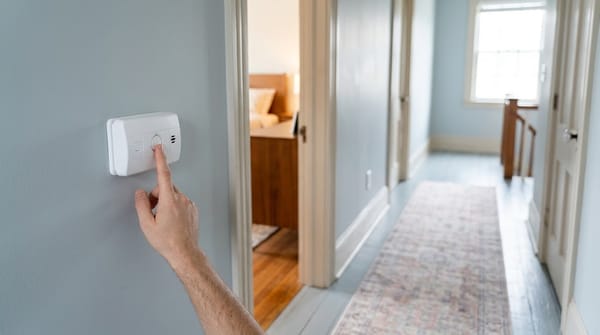
NFPA recommends a smoke alarm inside each bedroom, outside each sleeping area and on every level of the home, tested once a month and replaced every 10 years. Keep curtains and bedding away from space heaters and lamps. Our home fire safety tips cover the rest.
Picking the trends that fit you
Trends come and go, and a room you like living in will outlast any of them. Thoughtfully pick one or two ideas that solve a real problem, like better reading light, less clutter or a darker room for sleep, and leave the rest. That is the most reliable way to make your bedroom both good-looking and restful.
Sources: NIH National Heart, Lung, and Blood Institute (Healthy Sleep Habits), CDC (About Sleep), ENERGY STAR (Light Fixtures fact sheet), U.S. Consumer Product Safety Commission (Anchor It, clothing storage unit tip-over standard), NFPA (smoke alarm guidance).