Fall Front Porch Planter Ideas: Plants, Pots and Simple Outdoor Fall Decor
A fall front porch planter needs three things: plants that can take cold nights, a pot that drains, and a spot that gets enough sun. Get those right and the planter by your front door can last most of the fall. This guide covers which plants to use (mums, ornamental kale and cabbage, pansies, grasses), how big the pot should be, when to plant for your area, how to keep pumpkins from rotting early, and how to light the porch without open flames. Plant facts come from university extension services (NC State, University of Illinois, Mississippi State), and the candle advice comes from the National Fire Protection Association.
Plants that handle cool fall weather
Summer annuals like petunias and impatiens slow down once nights turn cold. These plants are suited to cool weather and thrive into late fall, in a container or in the landscape beds next to the porch.
- Mums. NC State Extension notes there are two kinds: garden mums, which are perennial and bred to survive winter, and florist mums, which are often greenhouse grown and may not survive a harsh winter outdoors. For a porch pot, either works. If you want to plant it in the garden later, choose a garden mum. University of Illinois Extension suggests buying mums at about 50 percent bloom, with plenty of tight buds, so the display lasts longer.
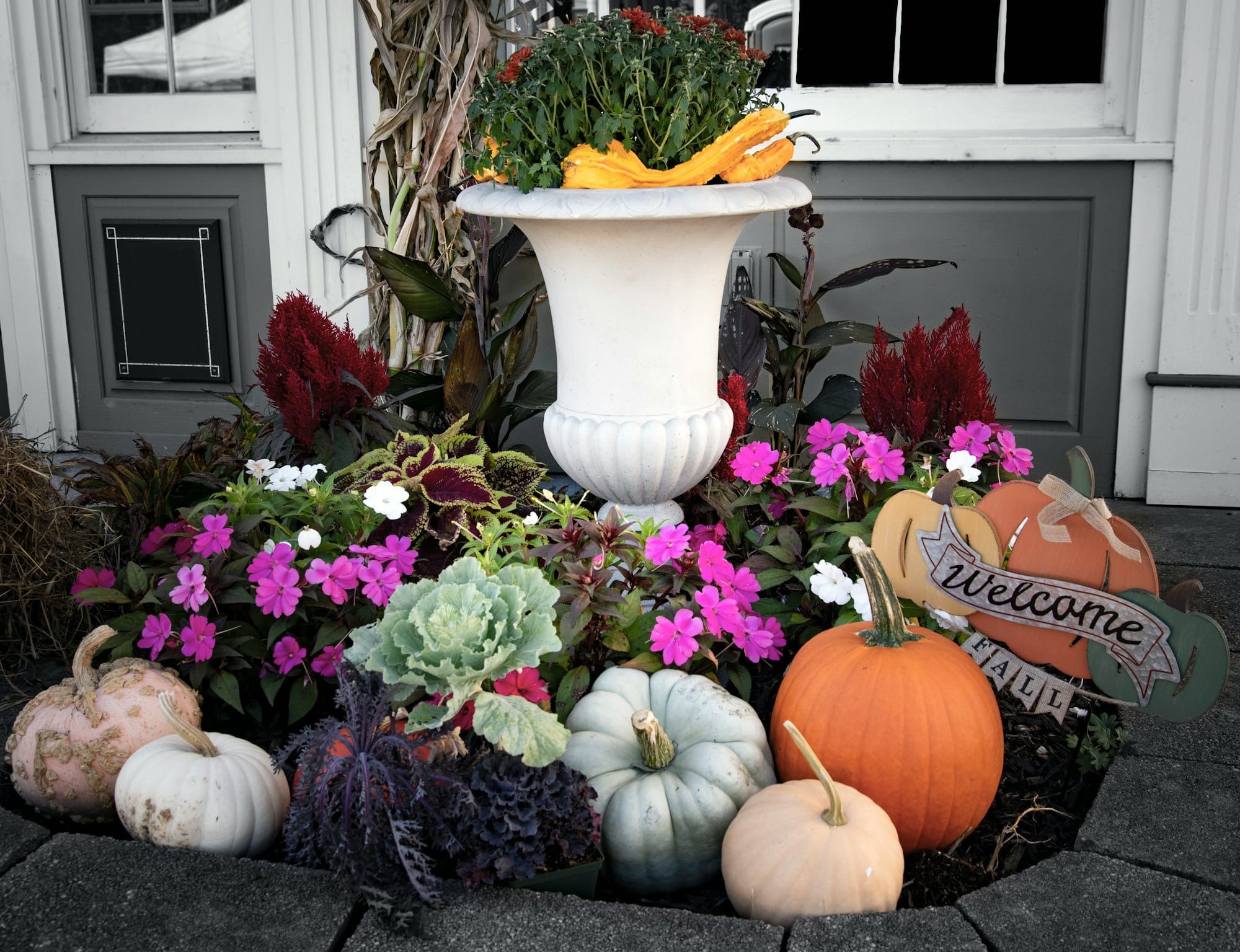
- Ornamental kale and cabbage. These add frilly leaves in white, pink and purple. According to NC State Extension, their color gets stronger as temperatures drop below 50 degrees, they do best in full sun, and they are cold tolerant down to about 5 degrees F. That makes them one of the longest-lasting fall planter choices.
- Pansies. Small but tough. Mississippi State University Extension notes pansies can freeze solid and thaw with little damage, and container pansies bloom best facing south. In mild-winter areas they can bloom through winter into spring.
- Ornamental grasses. A grass in the center of a container gives height and movement. Ask your local garden center which grasses are hardy in your area if you want to keep them past the season.
- Trailing plants. Ivy or other trailing foliage softens the edge of the pot and hides the rim.
A simple recipe for one pot: a grass or tall plant in the center (the thriller), mums or kale around it (the filler), and pansies or ivy along the edge (the spiller).
Choose the right pot and set it up to drain
Most planter problems in fall are water problems. Cool weather means soil dries slower, and a pot with no drainage turns into a bucket of soggy roots.
- Start with drainage holes. If a decorative urn or basket has no hole, use it as a cover pot: plant in a plastic nursery pot with holes, set it inside, and lift it out to drain after heavy rain.
- Go bigger than you think. A small container dries out fast in sun and wind and can tip over. A pot at least as wide as the plants are tall looks balanced. Large outdoor planters also hold enough soil to protect roots on cold nights.
- Use potting mix, not garden soil. Garden soil packs down in a container. A bagged container mix drains and holds air.
- Check materials. Terra cotta and some ceramic pots can crack if wet soil freezes inside. In cold areas, plastic, fiberglass or wood planters hold up better through winter.
- Lift it. Pot feet or a few bricks under the container keep water from pooling on a wood porch floor.
Watering and care through the season
Mums in full bloom use a lot of water. University of Illinois Extension recommends checking potted mums daily and more often if they sit in full sun, and notes that wilted flowers never fully recover. Strong afternoon sun also fades older blooms faster, so a spot with some shade can stretch the display. Push a finger an inch into the soil. If it is dry, water until it runs out the bottom. Pull off spent flowers every few days to keep the planter looking fresh.
Timing: plant before your first frost
Fall planting dates depend on where you live. A planter in Minnesota and one in Georgia run on very different calendars. Your county extension office can tell you the average first frost date for your area. As a general rule, set up fall containers a few weeks before that date so plants settle in while the weather is still mild. If a hard freeze is in the forecast, mums benefit from being moved against the house or covered overnight with an old sheet. Kale and pansies usually handle it on their own.
Arranging the porch
A matching planter on each side of the front door is the simplest layout, and two pots that flank the entry look tidy from the street. A few other ideas that add curb appeal without much cost:
- Group in odd numbers. Three pots of different heights by the steps look more natural than one large pot on its own.
- Layer with pumpkins and gourds around the base of the planter.
- Add a hanging basket of pansies or ivy if your porch has a hook, so the eye goes up as well as across.
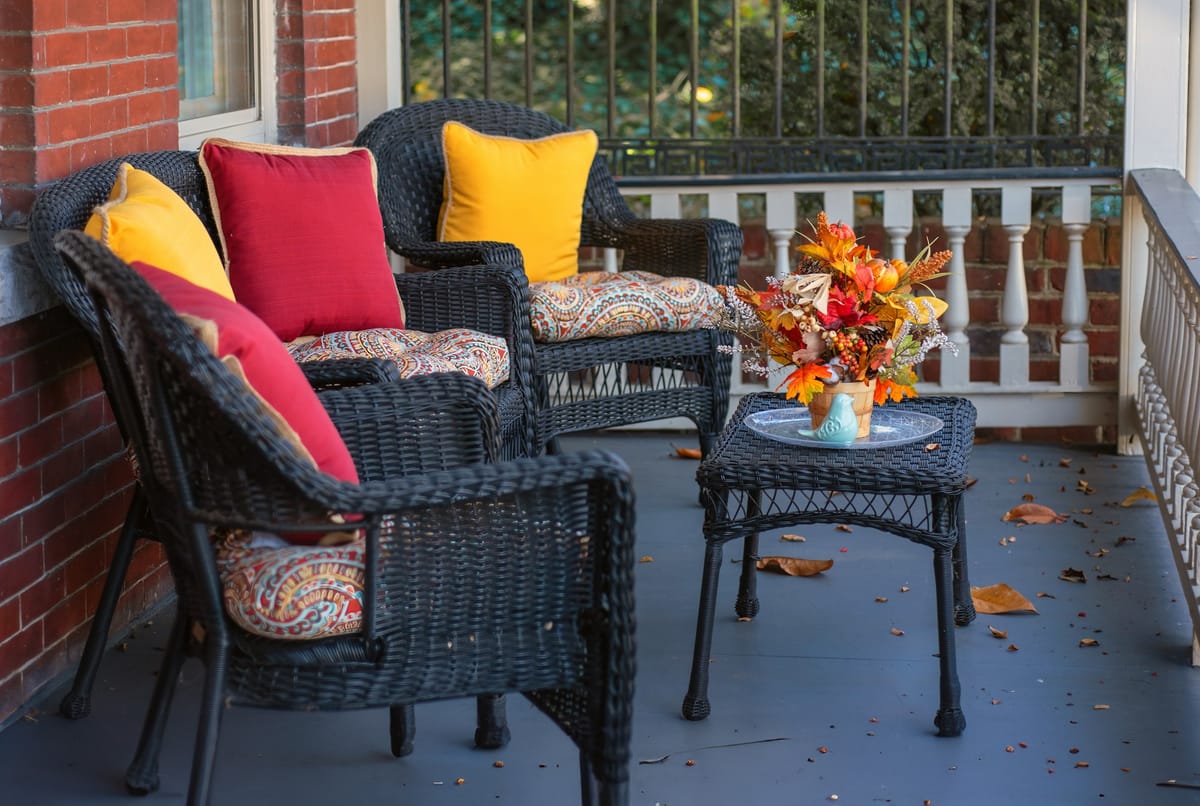
- Repeat a color. Pick one accent color, like deep red or orange, and use it in the plants, a pillow on the porch chair and the door decor. A patio set with seasonal pillows ties the whole outdoor space together.
- Keep the path clear. Leave a full walking width to the door, and keep decorations off the steps where someone could trip in the dark.
Pumpkins: keep them from rotting early
Pumpkins are part of most fall porch decor, and they are the first thing to go bad. University of Illinois Extension offers a few simple ways to make them last:
- Choose a pumpkin with the stem still on. Extension staff describe the stem as acting like a cork in a bottle. Without it, the stem end shrivels and starts to rot.
- Never carry a pumpkin by the stem, since it can snap off.
- Carved pumpkins break down much faster than whole ones. Coating the cut edges with petroleum jelly helps hold moisture for several days.
- Keep pumpkins out of puddles. A pumpkin sitting on wet wood or soil rots from the bottom, so set it on a dry surface or a small tray.
An uncarved pumpkin in a cool, dry, shaded spot will usually outlast a carved one by a wide margin, so many people decorate with whole pumpkins and carve only one or two right before Halloween.
Lights and candles outdoors
Fall decor and open flames do not mix well. NFPA (the National Fire Protection Association) recommends using a battery-operated candle or glow stick inside a jack-o-lantern, and warns that cornstalks, crepe paper and dried flowers are very flammable and should be kept far away from open flames and heat sources like candles and light bulbs. For pathway light without cords, solar stake lights work well along porch steps; see our guide to how solar garden lights work. For cords, outdoor-rated lights and more Halloween tips, read Halloween decoration safety.
After the season
When the porch shifts to winter, you do not have to start from zero. Pull spent mums, keep the kale and pansies if they still look good, and add evergreen branches or a small evergreen shrub in the center of the pot. Compost pumpkins that are still firm, and toss any that have gone soft. If you bought garden mums, plant them in a sunny bed so they can come back next year.
Sources: NC State Extension (Plant Toolbox: ornamental cabbage and kale; Graham County Center: Caring for Fall Mums); University of Illinois Extension, Over the Garden Fence; Mississippi State University Extension, Southern Gardening; NFPA Halloween safety tips.