Butcher Block Countertops: Pros and Cons, Wood Choices and Care
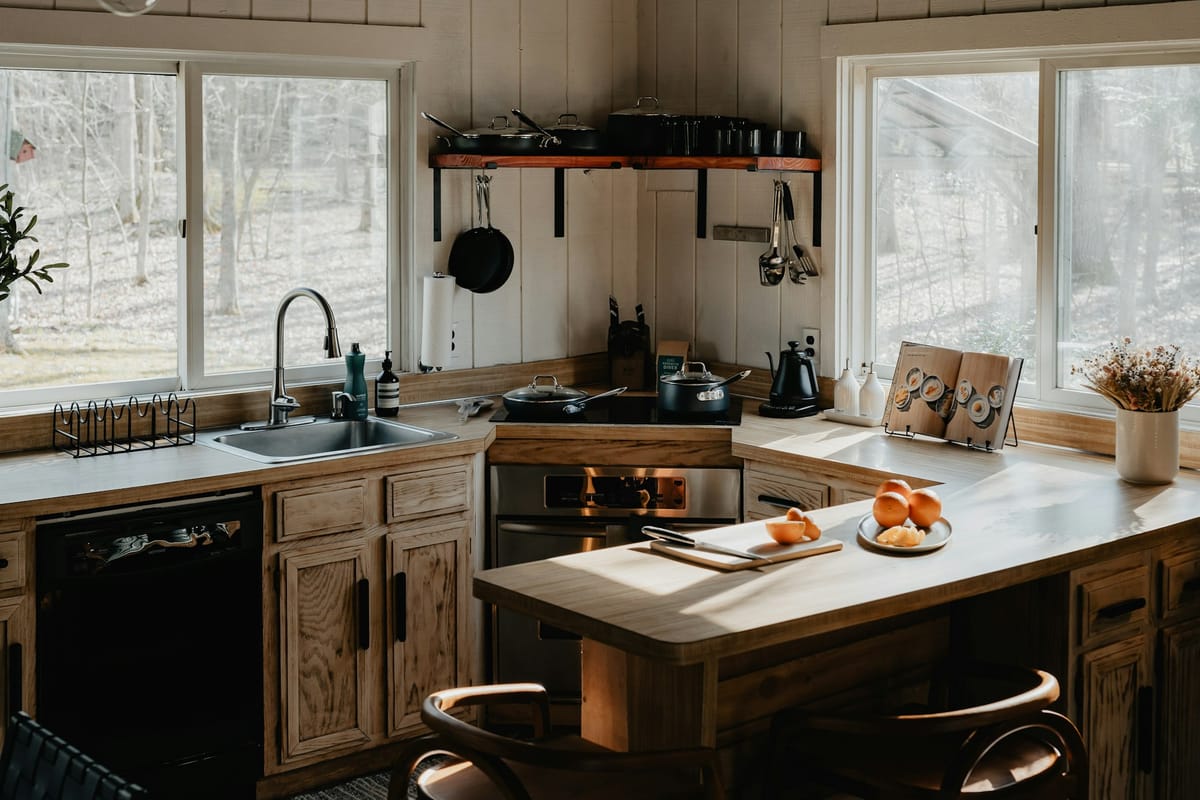
Butcher block countertops are strips of solid wood glued together into one slab. They look warm, and a scratch or light burn can usually be sanded out instead of replaced. They also need more care than granite or quartz, and they do not like standing water. This guide lays out the real pros and cons of butcher block for a kitchen remodel: how maple, oak and walnut compare in hardness (using USDA Forest Products Laboratory data), oiling versus sealing, water near the sink, cutting directly on the wood, heat, and how to clean wood countertops using USDA cutting board guidance. We left out price per square foot on purpose. Costs swing widely by wood type, thickness and region, so get local quotes for butcher blocks before you decide.
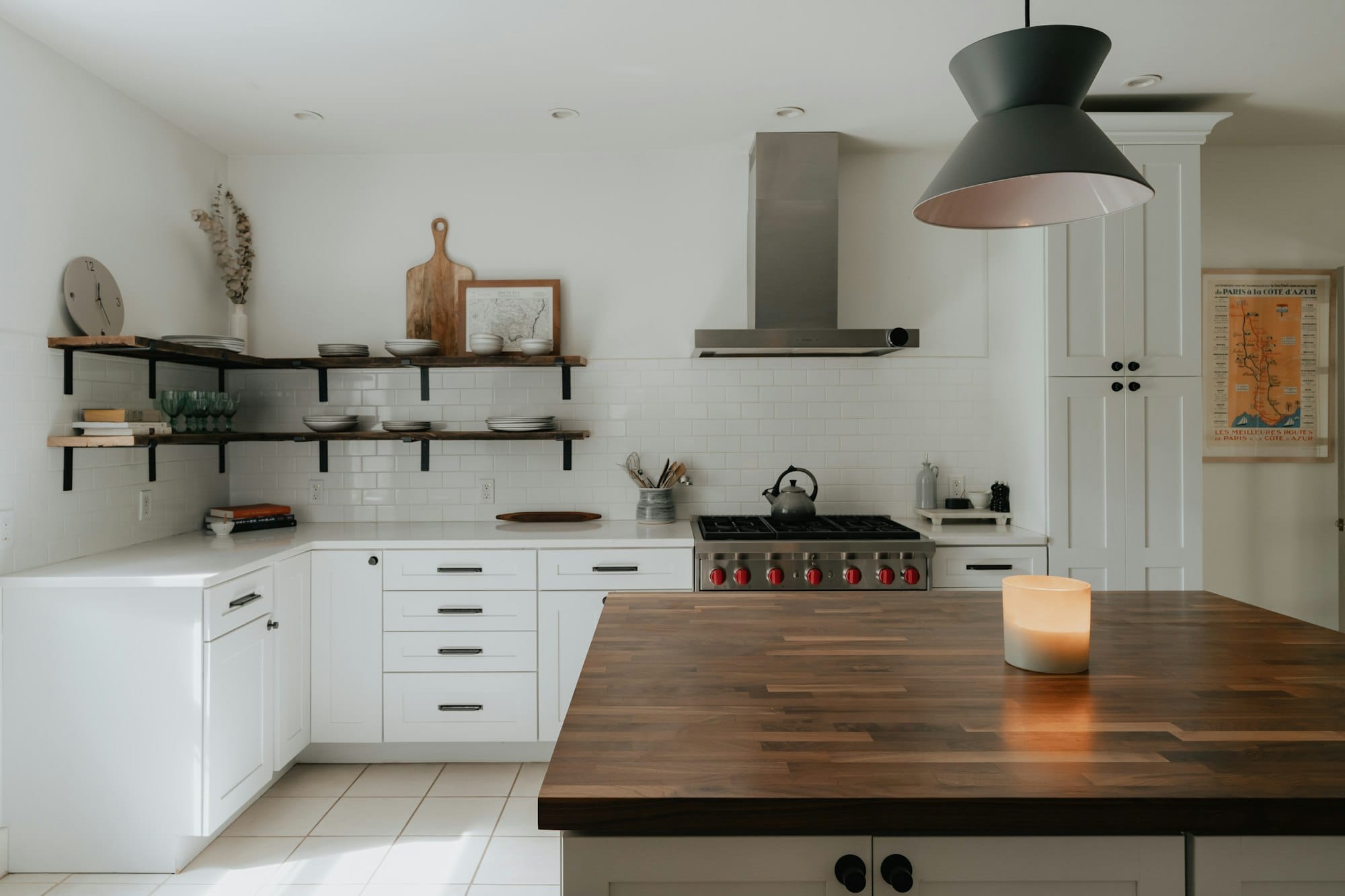
How butcher block is made
Every butcher block countertop is made of wood pieces glued together, but the way the pieces face changes how the top looks and wears.
- Edge grain: long strips set on their sides. This is a common style for kitchen counters. It shows straight lines of grain and holds up well to daily use.
- Face grain (wide plank): wider boards laid flat. It shows the most grain pattern.
- End grain: short blocks standing on end, like a checkerboard. This is the classic chopping block build, and it takes more labor to make than edge grain.
Wood types: maple, oak and walnut
The USDA Forest Products Laboratory's Wood Handbook lists side hardness for each species: the force needed to press a steel ball halfway into the wood. At the handbook's standard 12 percent moisture content, the numbers are:
- Sugar (hard) maple: 1,450 pounds of force. Pale, tight grain, and the hardest of the three.
- Northern red oak: 1,290 pounds. Strong, with a bold, open grain and visible pores.
- Black walnut: 1,010 pounds. Rich dark brown, but also the softest of the three, so it will dent more easily than maple.
Harder wood resists dents better. Softer wood shows wear sooner, though many homeowners like the lived-in look that comes with it.
The pros of butcher block countertops
- Warm look and feel. Wood counters soften a kitchen full of hard surfaces like tile, stainless and stone.
- Repairable. Scratches, light burns and stains can be sanded out with sandpaper and re-oiled. Granite and marble chips usually need a pro.
- Easier on dishes and knives. A dropped glass is more likely to survive on wood than on stone.
- DIY friendly. A wood countertop can be cut and installed with regular woodworking tools, which is why many homeowners use it for a kitchen island or a single run of counter.
- Quiet. Wood absorbs sound, so setting down pots is less noisy.
The cons of butcher block
- Water damage. The Wood Handbook explains that wood shrinks and swells as it gains and loses moisture. Around a sink, standing water can cause dark stains, raised grain, warping or cracks along glue lines. Wipe up any spill quickly and keep a dish mat under the drying rack.
- Dents and scratches. Wood is softer than stone. Expect marks over time, especially on walnut.
- Regular upkeep. Oiled tops need fresh oil whenever the wood looks dry or water stops beading. Sealed tops need a reseal when the finish wears through.
- Heat. A hot pan straight off the stove can scorch wood or damage a sealant. Use trivets near the range. If you are planning appliances in the same remodel, our guide to choosing kitchen appliances covers what to compare.
- Stains. Wine, berries and coffee can soak into oiled wood if left sitting.
Every dent, ring and imperfection becomes part of the surface. If you want a counter that looks the same in ten years, butcher block may not be the right countertop material for you.
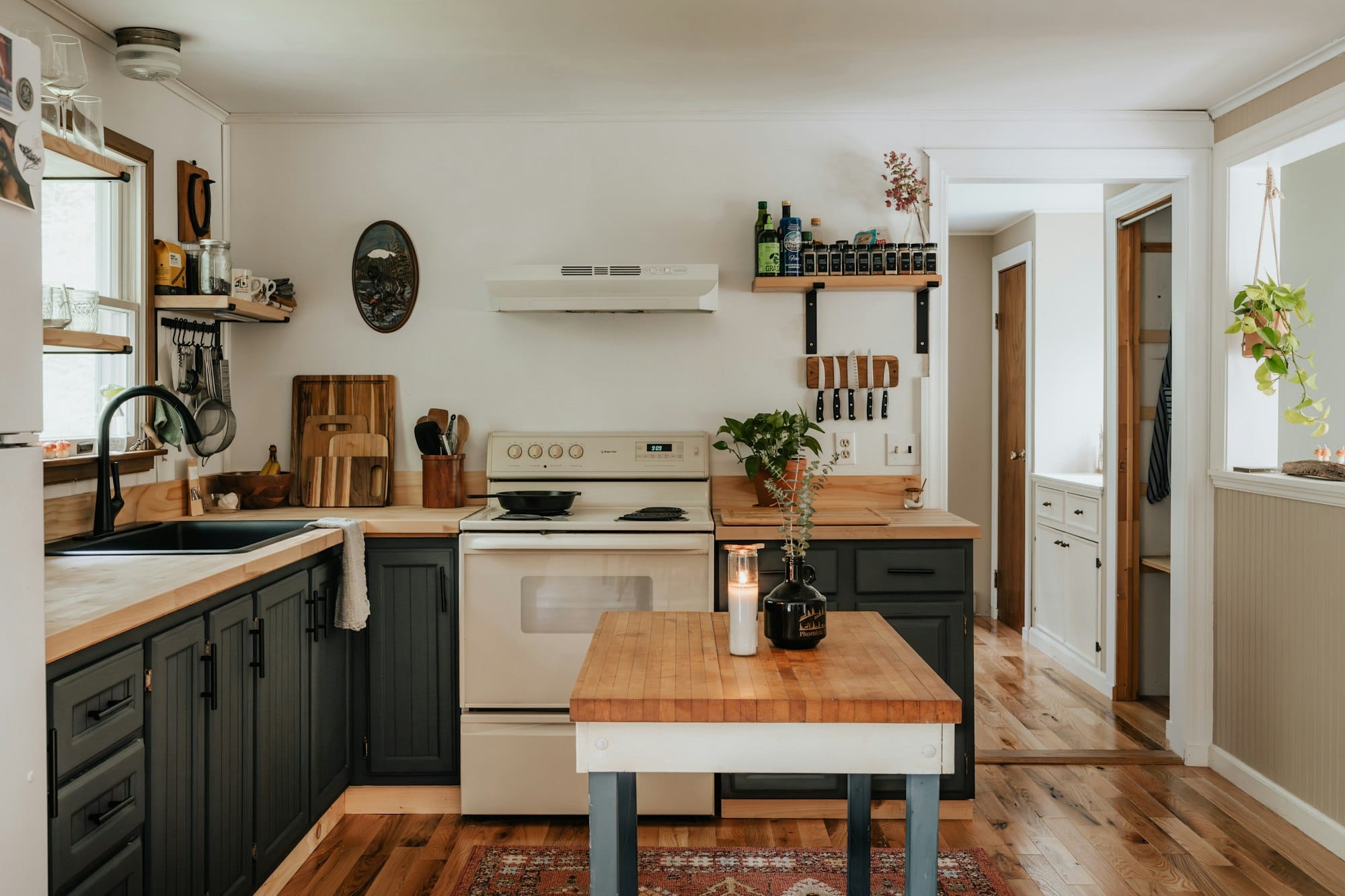
Oil or seal: two ways to finish
Oiled finish. Food-grade mineral oil soaks into the wood and slows moisture. The FDA lists white mineral oil as safe for certain uses in food (21 CFR 172.878), and it is sold specifically for cutting boards and butcher block. Apply a thin coat, let it soak in, and wipe off the extra. An oiled top is the one to choose if you want to cut on it, and touch-ups are easy.
Sealed finish. A film-forming sealant such as polyurethane or a hardwax product sits on top of the wood. A film keeps water on the surface instead of letting it soak in, which helps around a sink. The trade-off: you should not cut on it, because knife marks break the film and let water in. When it wears, you sand and refinish the whole area. Check the product label for food contact use and full cure time before setting food on it.
Can you cut directly on butcher block?
For restaurants, the FDA Food Code (as adopted in state codes such as California Health and Safety Code section 114132) limits wood food-contact surfaces to hard maple or an equally hard, close-grained wood for cutting boards and cutting blocks, and says cracked or damaged wood must be refurbished or replaced. Homes are not inspected, but that is a useful standard. You can cut on an oiled maple top, but it is wise to use a cutting board for everyday prep, especially for raw meat. A separate board can go to the sink for a full wash, and it keeps knife marks off the counter. USDA food safety guidance for cutting boards is to wash them with hot, soapy water after each use, rinse, and air dry. To sanitize, flood the surface with a solution of 1 tablespoon of unscented liquid chlorine bleach per gallon of water, let it stand several minutes, then rinse. Replace boards that show heavy wear. If you do cut on the counter, clean that area the same way, and keep raw meat on its own board.
Care routine
- Daily: wipe with warm soapy water and a soft cloth, then dry. Never let water pool.
- When it looks dry: oil an oiled top. Water beading on the surface is a good sign it is still protected.
- For scratches and stains: sand lightly with fine sandpaper along the grain, wipe off the dust, and re-oil.
- Sealed tops: clean with mild soap only and watch for worn spots near the sink. Reseal before bare wood shows.
Is butcher block right for your kitchen?
Butcher block counters suit a homeowner who likes a natural look, does not mind some upkeep, and is fine with a surface that changes over time. They work especially well on an island or a baking area away from the sink. If you want low maintenance and the most durability next to water, stone or quartz may fit better, and many kitchens mix the two: stone around the sink, wood on the island. Weigh the pros and cons of butcher block against how you actually cook.
Sources: USDA Forest Products Laboratory, Wood Handbook (2010), Table 5-3b and chapter 4; FDA Food Code wood use limitation as adopted in California Health and Safety Code section 114132; USDA FSIS cutting board guidance as summarized by NC State Extension (January 2025); FDA 21 CFR 172.878, white mineral oil.