
Small Laundry Room Design: Layout, Storage and Safety Ideas
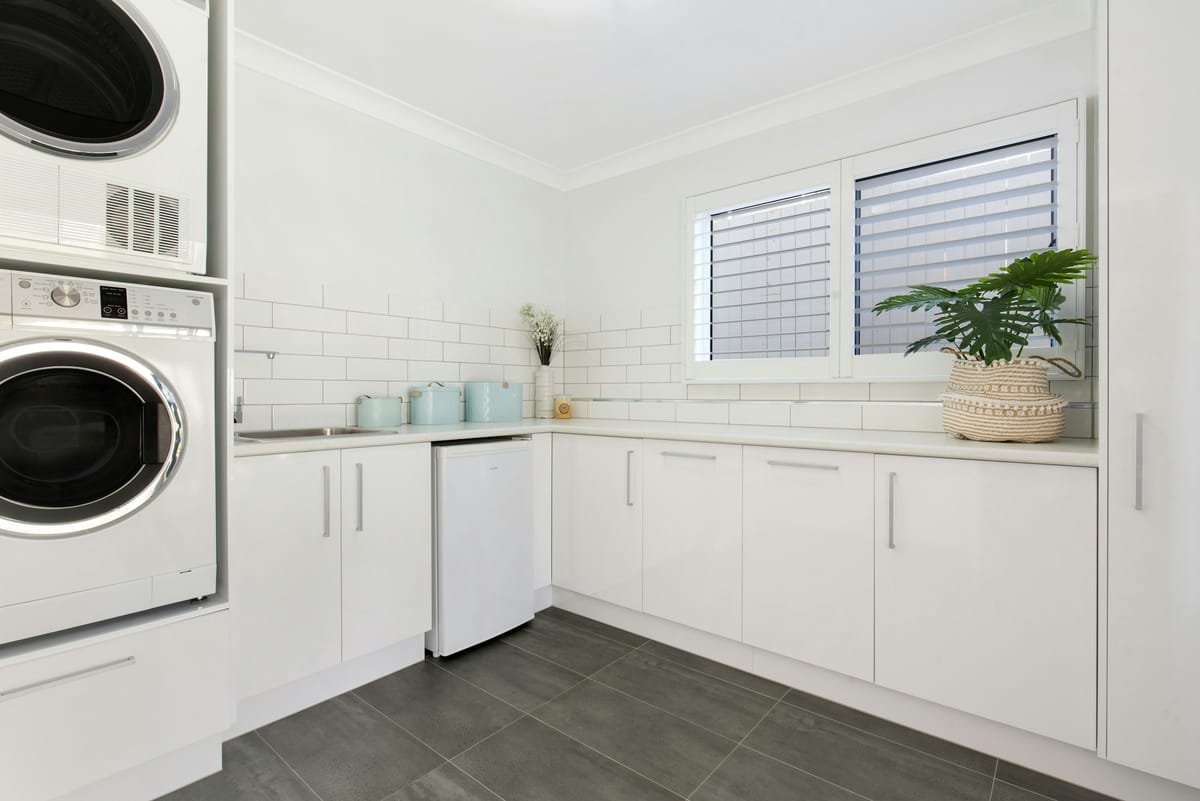
Most laundry rooms are not rooms at all, and good interior design here is mostly about fitting a utilitarian space to the way you actually do laundry. Many are a closet in the hall, a corner of the basement, a nook in the garage or a stretch of wall in the mudroom. That is fine. A small laundry space works well when there is a flat place to fold, a spot for every bottle, decent light and a dryer that vents safely. Paint, tile and wallpaper can come after.
These laundry room ideas follow the order that matters: layout, laundry room storage, folding space, lighting, floors and walls, then two safety items that a pretty laundry room makeover often skips. The dryer vent advice comes from the U.S. Fire Administration, and the detergent advice comes from the Consumer Product Safety Commission and the American Academy of Pediatrics, which says laundry products belong in a high, locked cabinet in any home where young children live or visit.
Plan the layout around the job
Laundry moves in a loop: dirty basket, washer, dryer or drying rack, folding surface, clean basket, out the door. Arrange the room so each step is next to the last one.
- Side by side or stacked: a front-load washer and dryer can sit side by side under a countertop, which gives you a folding surface on top. Stacking frees floor space in a closet. Check your manuals before stacking, since only some models are designed for it and you will need the matching stacking kit.
- Leave door swing room: measure the door swing for the washer, the dryer and the room door so they do not block each other.
- Keep the path clear: you should be able to stand in front of both machines with a full basket.
- Appliance access: leave enough slack in hoses, cords and the dryer duct to pull the machines out for cleaning and repair.
Storage solutions that fit small spaces
The walls above and beside the machines are your best storage space.
- Upper cabinets: a row of cabinets over the washer and dryer holds detergent, stain spray and spare supplies. Cabinet doors conceal clutter and make the room look calmer. Doors that lock or latch are better if you have young kids.
- Open shelves: one or two shelves are handy for baskets, towels and clothespins. Keep detergents and cleaners behind a latched cabinet door instead.
- A slim rolling cart: a narrow cart can fit in the gap between the dryer and the wall.
- Woven baskets or bins: one per person, or one each for darks, lights and towels, so sorting happens as clothes come in.
- Hooks and a rod: a hanging rod for shirts that should not go in the dryer, and hooks for a lint brush, a broom and reusable bags.
- Over-the-door racks: useful in a laundry closet with no wall space.
Built-in custom cabinetry looks great, but freestanding shelves and wall-mounted rails work in rentals and cost less. If your laundry area shares a space with a coat closet or garage, our small closet organization ideas carry over well.
Make room for folding
A folding surface is the most useful upgrade in a laundry room. Options from simplest to most work:
- A countertop laid across the tops of front-load machines. Leave a small gap above the machines so vibration does not rattle the counter, and make sure the lids or doors still open.
- A wall-mounted fold-down table that folds flat when not in use.
- A sturdy cart or the top of a low cabinet.
Countertops of laminate or sealed wood are easy to wipe. Pair the folding spot with a drying rack. A wall-mounted accordion rack or a folding floor rack handles sweaters and delicates and saves dryer time.
Light it well
Stains and lint are hard to see in a dim basement corner. If the room has natural light, keep the window clear. If not, a bright overhead fixture plus a light right over the folding surface makes a big difference. Under-cabinet strip lights work well in a laundry closet where an overhead fixture is blocked by shelves. A pendant light adds some style in a larger room, but keep it high enough that you will not hit it with a basket.
Floors, walls and a laundry sink
Laundry rooms get wet, so pick a floor that handles water: tile, sheet vinyl or luxury vinyl plank. A tile floor is durable and easy to clean, which makes it a practical laundry room floor. Put a drain pan under the washer if it sits over a finished floor, and check the washer fill hoses now and then for cracks or bulges.
For the walls, a scrubbable paint finish is easier to wipe down than flat paint. A white subway tile backsplash behind a laundry sink protects the wall from splashes. Wallpaper adds visual interest, but choose a moisture-resistant type in a damp room.
A laundry sink is worth adding if you have the plumbing. It is the place to soak stains, rinse muddy boots and wash paintbrushes. Have a licensed plumber or electrician handle new water lines and outlets near water.
Ventilation and humidity
Washers add moisture to the air and dryers give off heat. A small closed laundry room can get damp fast. Run an exhaust fan or leave the door open when the dryer is running, and wipe up water around the washer. If you see musty smells or spots on walls, our guide to preventing mold covers the fixes that apply here too.
Dryer vent safety
A good-looking room means little if the dryer vent is clogged. Fire data from the U.S. Fire Administration lists failure to clean as the leading factor in home clothes dryer fires. The USFA's dryer safety tips:
- Clean the lint filter before and after each cycle, and never run the dryer without the filter.
- Clean the back of the dryer, where lint builds up.
- Check that the venting system behind the dryer is not damaged, crushed or restricted.
- Make sure the outdoor vent cover opens when the dryer is running.
- Have the dryer installed and serviced by a professional.
Look at the duct behind your dryer. The U.S. Consumer Product Safety Commission has warned that flexible plastic or foil ducts trap lint more easily and are more likely to kink or crush, and that most dryer makers specify rigid or semi-rigid metal duct. Pushing the dryer tight against the wall to save space is a common way to crush a duct, so leave room behind it. Our home fire safety tips cover smoke alarms and the rest of the house.
Keep detergent pods away from kids
Single-load laundry packets are bright, soft and squishy, and to a toddler they can look like candy. The CPSC says not to let children handle them, and to keep packets sealed in their original packaging, locked up and out of a child's sight and reach. Handle them with dry hands, since water and saliva dissolve the film quickly.
The American Academy of Pediatrics goes further: if children 6 or younger live in or visit your home, use traditional detergent instead of packets. The AAP also advises:
- Store all laundry products in a high, locked cabinet, not on top of or under the washer and dryer.
- Keep packets in their own container until you use them, and put the container away. Children can grab packets left in baskets or on machines and counters. A clear decorative jar is the wrong place for them.
- Use the child lock on front-loading machines and do not let children play on or hang from the doors.
- Do not reuse empty detergent buckets or bottles.
- If you have a laundry chute, keep its door at least 36 inches off the floor.
If a child gets detergent in the mouth or eyes, call Poison Help at 1-800-222-1222 right away. The CPSC advises flushing eyes with water for at least 15 minutes.
Decor that holds up
Once the room works, it is easy to add personality. Change the paint color, add brass hardware or black pulls to white cabinetry, hang art you like, or lay a washable rug in front of the machines. Matching containers for detergent and clothespins make a shelf look tidy, as long as anything a child could mistake for food stays locked up. A laundry room that doubles as a mudroom can use a bench and hooks by the door, and a corner can become a pet area with a bed and a leash hook. Simple laundry room decor like this makes the space nicer without getting in the way. Keep decor away from the dryer's air intake and the vent, and you will have a hardworking space that is also pleasant to stand in.
Sources: U.S. Fire Administration, Clothes Dryer Fire Safety and Clothes Dryer Fires in Residential Buildings; U.S. Consumer Product Safety Commission, dryer safety documents and liquid laundry packet warning; American Academy of Pediatrics, HealthyChildren.org, Laundry Room and Detergent Safety.