Homeowners Insurance Explained: What It Covers and How to Read Your Policy

Find your home insurance policy and flip to the declarations page, the first sheet or two with the dollar amounts. One number there, the dwelling limit, is what your insurance company will pay to rebuild your home after a covered loss. If it is too low by $30,000, you pay the difference. A policy runs dozens of pages, but most of what matters is in a handful of lines.
Here is a plain look at what standard homeowners insurance coverage includes, the gaps people miss, and what to ask your insurance agent or insurance provider. Homeowners insurance policies differ by company and state, so your state insurance department is the place to check anything local.

What standard homeowners insurance policies cover
A standard policy is usually written on a form called HO-3, which the Insurance Information Institute (Triple-I) describes. It protects your home by paying for damage from fire, lightning, tornadoes, windstorms, hail, explosions, smoke, vandalism and theft, among other causes. A homeowners policy usually has these parts:
- Dwelling coverage: the house itself. This pays to repair or rebuild after a covered loss.
- Other structures: a detached garage, shed or fence.
- Personal property coverage: furniture, clothes and electronics. Triple-I says belongings are covered anywhere in the world, not just inside your house.
- Loss of use: extra living costs, such as a hotel, while a covered loss makes the house unlivable.
- Liability coverage: protection if someone is hurt on your property or you damage their property. Triple-I gives $100,000 as the standard amount, and medical payments coverage helps with minor injuries to guests regardless of fault.
Replacement cost vs actual cash value
One line in your replacement cost coverage can change a claim by thousands of dollars. Replacement cost pays what it takes to rebuild or replace something without subtracting for age. Actual cash value subtracts depreciation. The NAIC, the group of state insurance regulators, tells homeowners to check which one their policy uses.
Triple-I says the structure on an HO-3 is paid on a replacement cost basis, but if you decide not to rebuild you receive actual cash value. Triple-I's example: a policy limit of $150,000 covers a $120,000 rebuild, but leaves you $30,000 short on a $180,000 rebuild. Base your dwelling limit on what it costs to rebuild, not on the home's market price, since market price includes the land. Ask your agent how the figure to rebuild your home was set and how often it is updated.
What is not covered
These are the gaps that surprise neighbors after a storm or a flood. Check each one against your own policy this week.
- Flood. The NAIC and the CFPB both say standard homeowners and renters policies do not cover flood. Flood insurance is a separate policy, usually through FEMA's National Flood Insurance Program. FEMA says it generally has a 30-day waiting period, with no wait when it is bought as part of a loan closing. Call 800-427-4661 or ask your agent.
- Earthquake. Also not covered. Triple-I says it is sold as additional coverage.
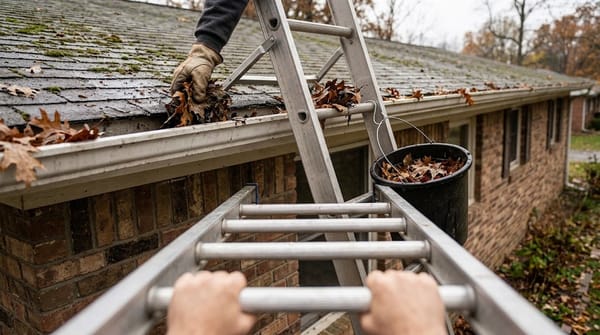
- Water seepage and maintenance problems. Triple-I says seepage is excluded and treated as a maintenance issue. Slow leaks and old roofs are the owner's job to fix. See our post on common roof problems to catch them early.
- Extra rebuilding costs from code changes. Triple-I says ordinance or law costs are excluded unless you add an endorsement.
- Food spoilage. Generally not covered, according to Triple-I, with some exceptions by state.
Limits that catch people off guard
Triple-I says the standard policy pays only $1,000 to $2,000 for theft of jewelry, so valuable pieces may need a higher limit or a separate floater. Fallen-tree removal is generally limited to $500 when a tree damages your home. Some areas also have a separate windstorm, hurricane or hail deductible. Read the declarations page for any of these.
Deductibles
A deductible is the amount you pay out of pocket before the insurance company pays. The NAIC says the higher the deductible, the lower the premium, usually. Picking a deductible is a trade between insurance costs now and a bigger bill when you file a claim. Pick an amount you could pay next week from savings. The CFPB also says to check the deductible amounts before a disaster, not after.
How to file a claim and be ready for one
The NAIC calls a home inventory the best way to work out how much coverage you need for contents, and it helps with a claim too. Walk through each room with your phone, open the closets and drawers, say what each item is, and keep the video somewhere other than your house. For where to keep documents and supplies, see our emergency kit checklist.
If you do need to file a claim, call your insurance company or agent, take photos before cleaning up, and keep receipts for emergency repairs. Your policy spells out the deadlines.
A yearly check-up
The NAIC recommends reviewing all your policies each year. Ask your agent four questions: Is my rebuild limit current? Is it replacement cost or actual cash value? What are my deductibles? Which perils are excluded? The NAIC also notes that many companies discount for bundling policies, so ask whether that applies to you.
Sources: Insurance Information Institute (Triple-I), Am I Covered?; NAIC, Your Annual Insurance Check-up; CFPB, Get prepared before a disaster; FEMA National Flood Insurance Program.